Commercial Drone Insurance Essential Coverage for Pilots
By Armando Colina Rojas · · 8 min read
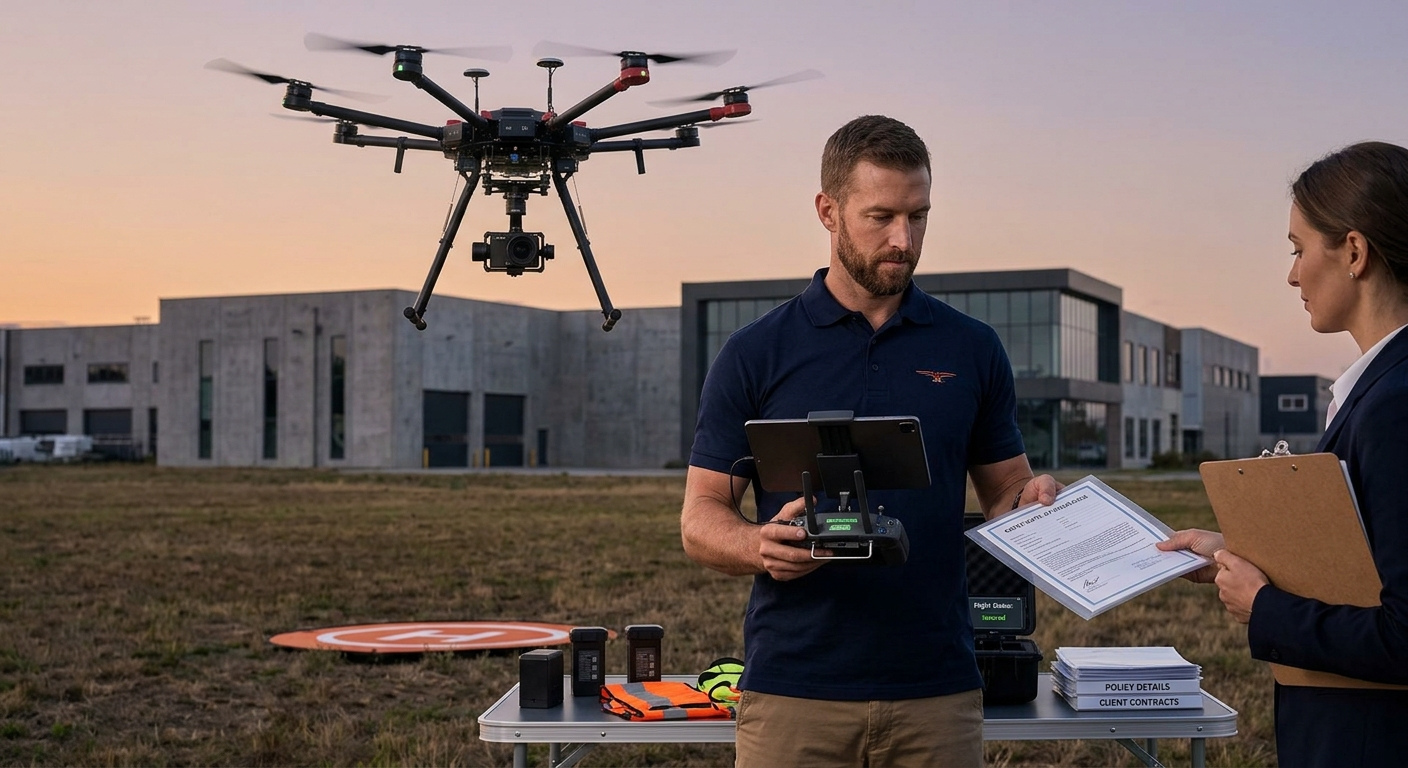
Sooner or later, every commercial drone pilot runs into the same moment: a client asks for a certificate of insurance before signing the contract. Plenty of companies, property managers, production houses, and municipalities will not let a drone take off on their property without an active liability policy that protects them. And even if no client ever asked, flying professionally without insurance means covering any third-party damage, or the loss of equipment worth thousands of dollars, out of your own pocket.
In this article I break down the types of coverage available for commercial drones, which ones I consider essential, the difference between annual and on-demand policies, which exclusions deserve a close read, and how to interpret price ranges without falling for misleading comparisons. I am not going to quote exact premiums, because they vary widely by insurer, equipment, experience, and type of work, and they change over time. What I want is for you to walk into a conversation with a broker or carrier knowing exactly what to ask.
Is Insurance Required Under Part 107?
At the federal level, Part 107 does not require commercial drone pilots to carry insurance. The FAA regulates operational safety but does not mandate a minimum policy the way many states do for cars. That leads some pilots to treat insurance as optional, and technically it is as far as the FAA is concerned. In commercial practice, though, it almost never is. The requirement comes from contracts, from the owners of the places you fly, and in some cases from state or local rules.
Some cities, parks, sports venues, and public agencies require insurance with minimum limits before they issue film permits or allow use of their spaces. Large corporate clients usually have standard requirements for every contractor as well. That is why, before quoting a job, I always ask whether the client or venue has specific insurance requirements, because it can affect project cost and the time needed to get paperwork issued.
Another common misconception is that your homeowners or general business policy covers the drone. Many homeowners and commercial general liability policies explicitly exclude aircraft, and drones usually fall under that definition. Even when a policy includes them in limited cases, commercial use is often carved out. Do not assume anything. Get written confirmation of what is covered.
Liability The Coverage You Cannot Skip
Third-party liability coverage is the foundation of any drone insurance program. It protects you if your operation injures someone or damages someone else’s property: a drone that lands on a car, cracks a window, damages a roof, or hurts a bystander. It typically covers settlements or judgments plus legal defense costs, which can be substantial even if you are ultimately found not at fault.
The most common limit clients ask for is $1 million per occurrence, and some larger contracts or crowded venues require more. Look closely at how the limit is structured: whether it is a combined single limit for bodily injury and property damage, whether there is an annual aggregate, and whether defense costs erode the limit or are paid in addition to it. Two policies with the same $1 million on the declarations page can protect you very differently.
Liability Add-Ons Worth Considering
Beyond basic liability, some carriers offer extensions that are worth evaluating based on your work. The most relevant for photo and video pilots is invasion of privacy or personal injury coverage, which responds to claims that you captured images of people or property without consent. If you work in residential areas, real estate, or events, that extension makes a lot of sense.
Invasion of privacy. Claims arising from images or footage a third party considers intrusive.
Non-owned aircraft. Liability when you fly a rented drone or one owned by the client.
Additional insured. The ability to add the client as an additional insured on your policy, which many contracts require.
Hull Coverage: Protecting the Aircraft
Hull coverage protects the drone itself against physical damage or loss. It usually includes crashes and falls and, depending on the policy, theft or loss in transit. If your main aircraft represents a significant investment, losing it without coverage can stall your business for weeks, because on top of replacement cost you lose jobs while you are grounded.
There are several details to check. First, whether the policy pays replacement cost or actual cash value after depreciation, since on a drone that is two or three years old the gap can be large. Second, the deductible, which for hull coverage is often a percentage of the insured value or a fixed amount. Third, whether a total loss from a lost link or flyaway is covered, a scenario some policies exclude or limit. And fourth, whether coverage applies only in flight or also on the ground and in transit.
One important note: manufacturer protection plans such as DJI Care Refresh are not insurance. They are replacement programs with their own terms, useful for repairing or replacing equipment after an accident, but they do not cover liability to third parties. Many pilots pair a manufacturer plan for the hardware with a liability policy, and that is a reasonable strategy as long as you understand the limits of each.
Payload and Ground Equipment
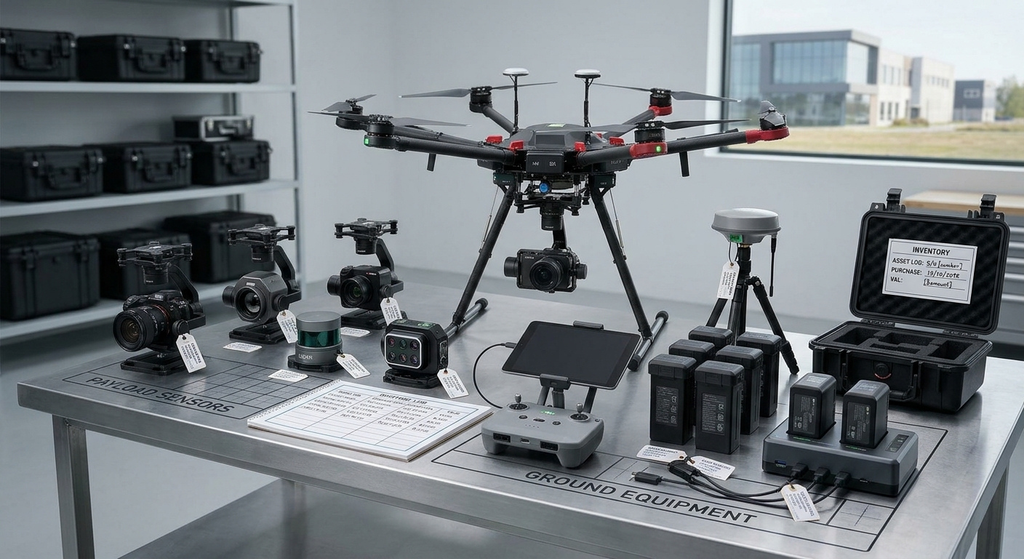
Payload coverage protects what the drone carries: interchangeable cameras, thermal sensors, LiDAR, multispectral cameras, or other equipment. On integrated drones with a built-in camera, hull coverage is usually enough, but if you fly platforms with expensive sensors, insure them explicitly, because the sensor can be worth more than the aircraft.
Ground equipment coverage includes the remote controller, tablets or monitors, batteries, chargers, and on some policies RTK base stations. These items are easy to overlook, but together they can be a meaningful share of your investment. Before you buy, build an inventory with serial numbers and values, because you will need it to get a quote and, more importantly, to file a claim.
Keep an inventory of all your gear with serial number, purchase date, and value. It is the first thing a carrier asks for when quoting and the thing that speeds up a claim the most.
On-Demand vs. Annual: Choosing a Policy Model
The drone insurance market has two main models. Annual policies cover all your operations for 12 months, usually with limits and scheduled equipment defined in the policy. On-demand policies are purchased for a single flight, a day, or a short period, typically through an app, and they only cover you for that time window and the location you specify.
On-demand makes sense if you fly commercially only a few times a year, or if you are starting out and need to satisfy a client without committing to an annual policy. Its advantage is flexibility: you can choose the liability limit for each job and generate a certificate of insurance almost instantly. The downside is that if you fly often, the cumulative cost can exceed an annual policy, and there is always the risk of forgetting to activate coverage before a flight.
An annual policy is the natural choice once you have steady work. It covers you automatically, makes it easy to issue certificates to different clients, and often bundles hull and payload into one contract. As a very rough reference, a $1 million annual liability policy for a solo pilot often lands in the range of a few hundred dollars per year, and it can go past a thousand once you add hull, payload, higher limits, or higher-risk work. On-demand coverage can run from a few dollars for an hour to tens of dollars for a full day depending on the limit. These are ballpark figures only, so always get quotes based on your real details.
Exclusions and Conditions to Read Carefully
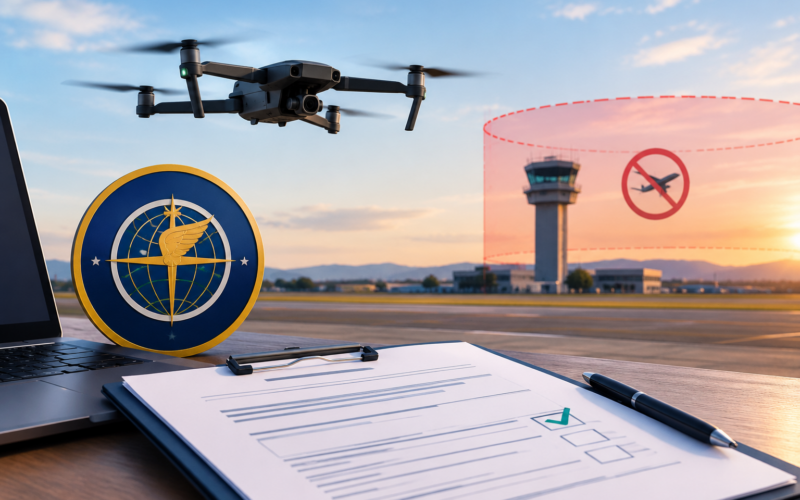
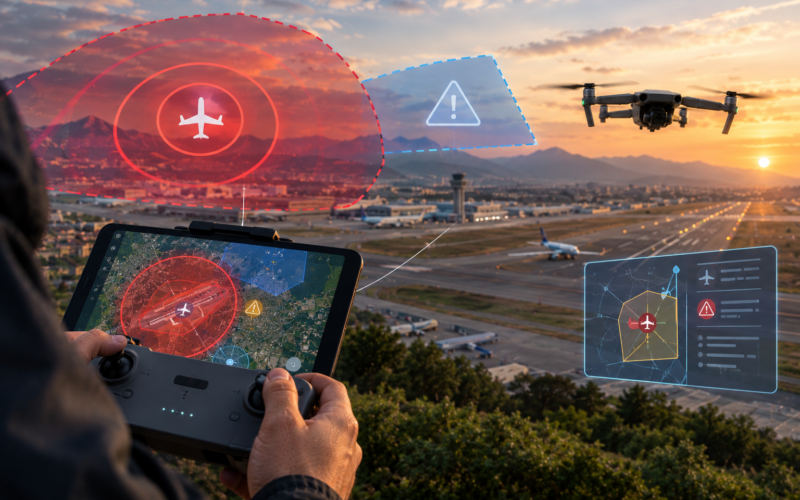
The most important part of a policy is not the declarations page but the exclusions. The big one for a Part 107 pilot is illegal or unauthorized operations. Many policies will not pay if the loss happens while you are flying without a valid certificate, without current recurrent training, in controlled airspace without authorization (for example, without LAANC when you need it), inside a TFR, or outside the conditions of a waiver.
Regulatory compliance. Find out what happens if you are out of compliance with any Part 107 rule at the time of the incident.
Named pilots. Some policies only cover listed pilots; if someone else flies, there may be no coverage.
Specific uses. Spraying, high-risk inspections, or flights over water may require explicit approval.
Territory. Confirm where the policy applies, especially if you travel outside the U.S.
Wear and maintenance. Damage from wear and tear, non-accidental electrical failure, or poor maintenance is usually excluded.
Also check how and how quickly you must report an incident. Some policies require immediate notice and preservation of the damaged equipment and flight logs. That is why I always keep the aircraft logs and a flight record with date, location, conditions, and authorizations for every commercial flight. If you ever need to file a claim, that documentation is what shows you were operating within the rules.
Certificates of Insurance and Client Requirements
When a client asks for proof of insurance, they usually want a certificate of insurance (COI) showing your coverages and limits. Often they will also ask to be named as an additional insured, which extends your policy’s protection to them for claims arising from your work. More formal contracts may include a waiver of subrogation, which prevents your insurer from going after the client after paying a claim.
My advice is to read the insurance clause in the contract before accepting the job and send it to your broker or carrier to confirm your policy meets it. If you need an additional endorsement, request it early, because some take time to issue. A properly issued certificate delivered on time signals professionalism and keeps the project from stalling on flight day.
My Recommendations for Building Your Coverage
If you are just starting, prioritize liability. It protects you from the risks that can reach your personal assets, and it is what clients will require. An on-demand policy can be a good starting point while you build your client base, and once your workload justifies it, move to an annual policy that includes hull, payload, and ground equipment based on the value of your gear.
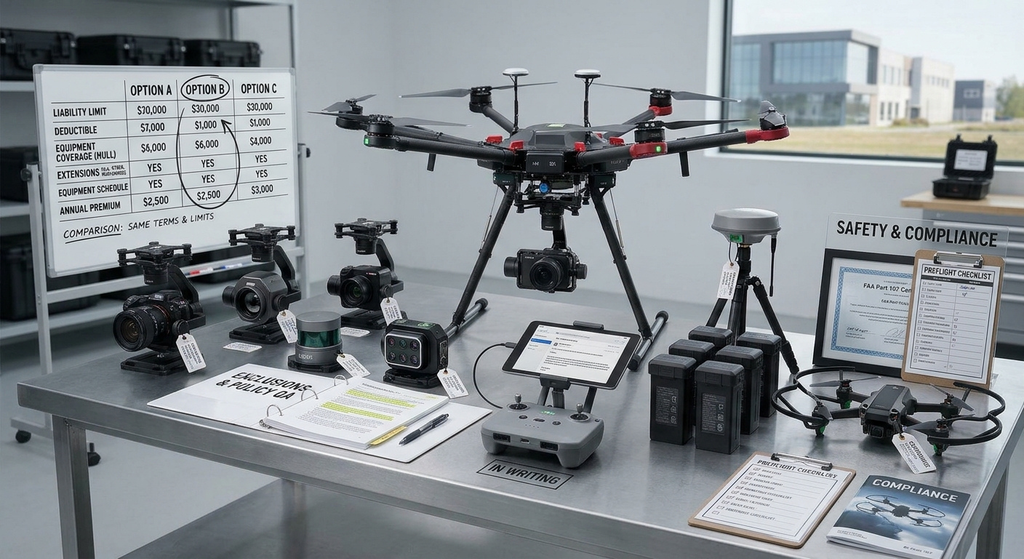
Before you sign, compare at least two or three options on equal terms: same limit, same deductible, same extensions, and the same equipment schedule. Read the exclusions, ask in writing about anything that is unclear, and keep the answers. And remember that the best insurance is the kind you never have to use. Strict Part 107 compliance, current authorizations, and a solid preflight routine lower your risk and, over time, can help you get better terms at renewal.
Comments
Comments are closed.