Remote ID what it is and how to comply with your drone
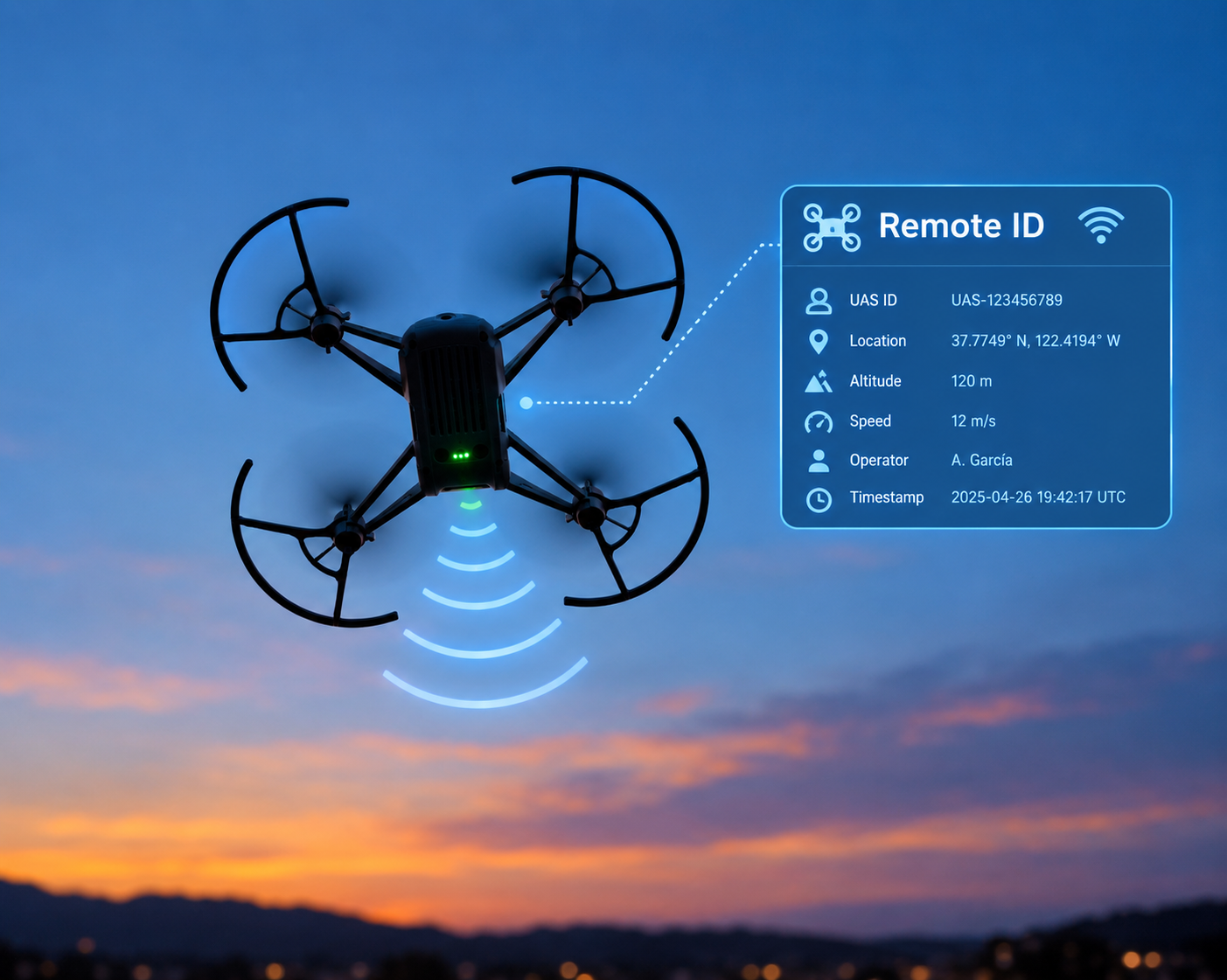
Airplanes have tail numbers, and drones have Remote ID. It’s a kind of digital license plate: while the drone is flying, it broadcasts information that identifies it and shows where both the drone and the pilot are.
Since 2024 the FAA requires almost every pilot to comply. Here’s what it is, who it affects and how to comply.
What it broadcasts
A drone with standard Remote ID broadcasts, among other data:
- An identifier for the drone: its serial number or a session ID.
- The drone’s position, altitude and speed.
- The control station’s position, that is, the pilot’s.
- A time mark and emergency status, if any.
This information can be received by nearby devices, such as a phone, and is mainly used by authorities and law enforcement.
Who has to comply
Every drone that must be registered with the FAA has to comply with Remote ID. For a commercial pilot this is key: under Part 107 every drone is registered, no matter its weight. So even a drone under 250 grams needs Remote ID if it’s used for work.
The three ways to comply
- A standard Remote ID drone. The drone has it built in from the factory. It’s the simplest option, and most recent DJI models include it.
- A broadcast module. A small device that attaches to older drones without built-in Remote ID. In this case the drone must always stay within visual line of sight.
- FRIAs. FAA-Recognized Identification Areas, usually model aircraft clubs or educational institutions, where you can fly without Remote ID. They only work if the flight starts and ends inside the area.
What I check to stay compliant
- That my drone appears on the list of Remote ID declarations of compliance published by the FAA.
- That the Remote ID serial number is linked to the drone’s registration in FAADroneZone. Under Part 107, each drone is registered separately.
- That the firmware is up to date, since some Remote ID features arrive through updates.
One important detail
Remote ID isn’t a flight authorization. It doesn’t replace LAANC, site permissions, or any other Part 107 rule. It simply makes it possible to know who is flying and where.
Regulations change over time. Before you fly, always check the FAA’s official information at faa.gov.
Comments