Which DJI drone should you choose for your project?
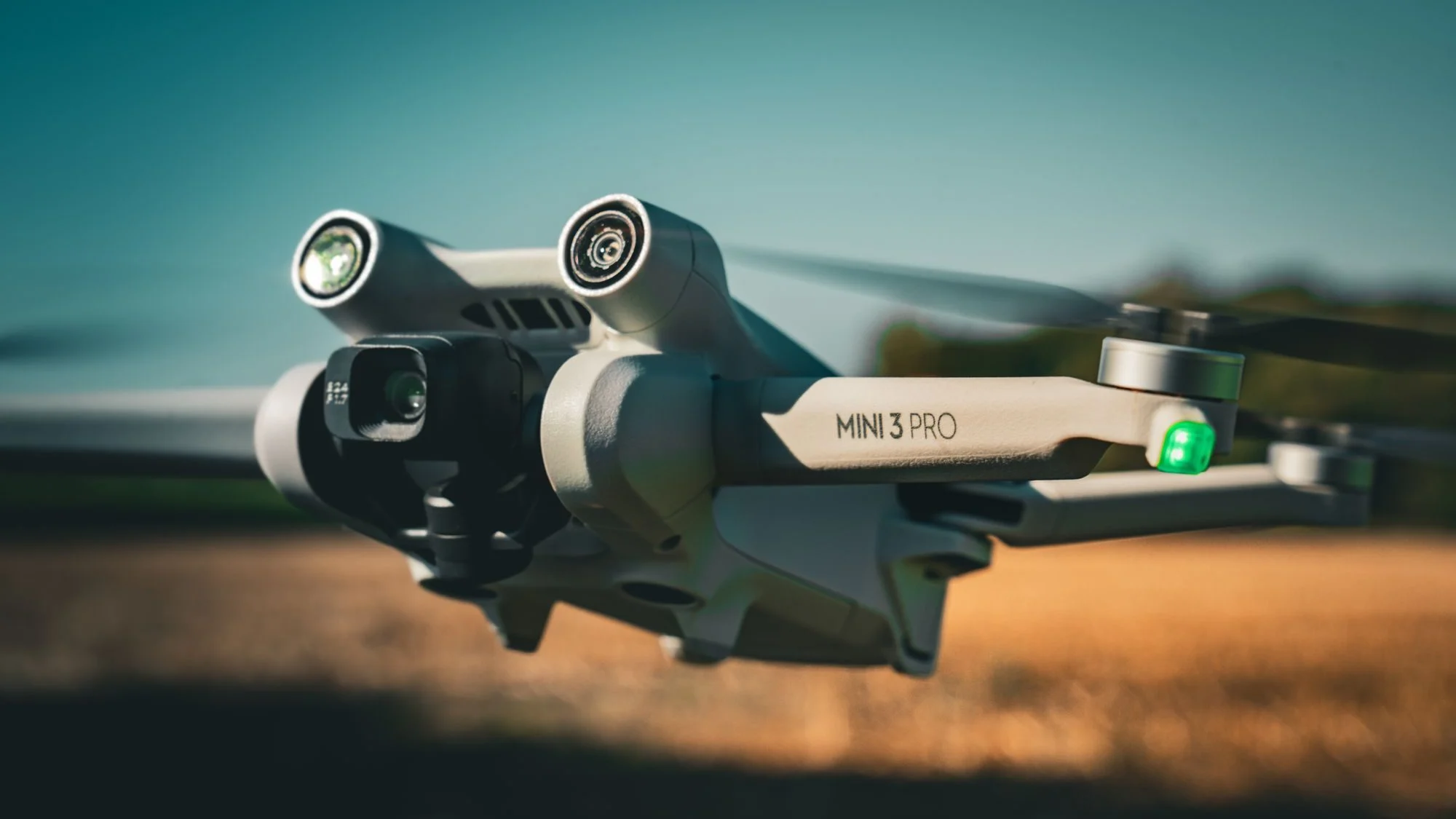
One of the questions I get most often is which drone to buy. My answer is almost never a specific model, but another question: what are you going to use it for? I work with DJI equipment because its ecosystem is solid, reliable and easy to maintain, but within the brand there are very different families designed for very different needs.
In this article I explain how I think about choosing between the three big consumer and semi-professional series: Mini, Air and Mavic. I will not give you spec sheets, which change with every generation, but criteria that work for any model.
First, define the project
Before looking at cameras or flight time, I answer four questions:
- What am I delivering? Photos for social media, video for a brand, a structural inspection or a 3D model do not ask for the same thing.
- Where am I flying? A windy beach is not the same as a courtyard between buildings or an open rural area.
- How am I getting around? If I walk, fly commercially or climb a mountain, weight and size matter a lot.
- Which rules apply? For commercial flights under FAA Part 107 every drone must be registered, but weight is still relevant for other rules and for flying in certain environments.
With those answers, the choice becomes much simpler.
Mini series: light and discreet
The Mini series is designed to weigh under 250 grams. That number is no accident: in many countries it marks the line between stricter and more flexible requirements for recreational use. For professional work in the United States you still need to comply with Part 107, but the small size is still a huge advantage.
What I like about the Mini series:
- It fits in any backpack and you barely notice it when traveling.
- It is quieter and draws less attention, which helps at events or in urban areas.
- It is ideal for social media content and projects on a tight budget.
Where it falls short: it struggles more than its bigger siblings in strong wind, and its sensor, while surprising for its size, has limits in low light.
Air series: the balance
For many pilots, the Air series is the sweet spot. It is larger and sturdier than the Mini, with better stability in wind and a more capable camera, but it is still easy to carry.
When I recommend it:
- Real estate and tourism projects where image quality matters.
- Brand videos that need good dynamic range.
- Pilots who want to grow without carrying heavy gear.
If I had to pick a single drone to start working professionally, I would often go with this series.
Mavic series: the professional tool
The Mavic series is DJI's high end for consumers. It usually includes larger sensors and, in recent generations, several cameras with different focal lengths. That means better image quality, more creative flexibility and better performance when the light is not on your side.
When I use it:
- Demanding video productions.
- Jobs where I need to get visually close to a detail without moving the drone closer, which is very useful in inspections.
- Assignments where the client expects the highest possible quality.
The price you pay: more weight, more bulk and a bigger investment. Batteries are also more expensive, which is worth factoring in from the start.
What matters as much as the drone
Choosing the model is only part of it. Other factors matter as much as the camera:
- Spare batteries. One flight is rarely enough. I never head out with fewer than three charged batteries.
- ND filters. For video they are almost mandatory if you want natural motion in daylight.
- Fast, reliable memory cards. Losing footage because of a cheap card is the most expensive way to save money.
- Insurance and maintenance. A professional drone is a work tool; treat it like one.
- Remote ID. Current models have it built in, but it is worth confirming before you buy.
How I decide
If the project is light, I travel a lot or I work in spaces with people around, the Mini series gives me freedom. If I am looking for a balance between quality and portability, the Air series is my most versatile option. And when the job demands the highest quality or precision, I turn to the Mavic series.
There is no perfect drone: there is the right drone for each job. My recommendation is to start with what you will actually do in the coming months, not with what you imagine doing someday. It is better to master simple equipment than to own an advanced one you do not know how to use.
Are you torn between two models? Tell me in the comments what kind of projects you want to do and I will give you my take.
Comments