How to Price Aerial Videography and Photography Projects
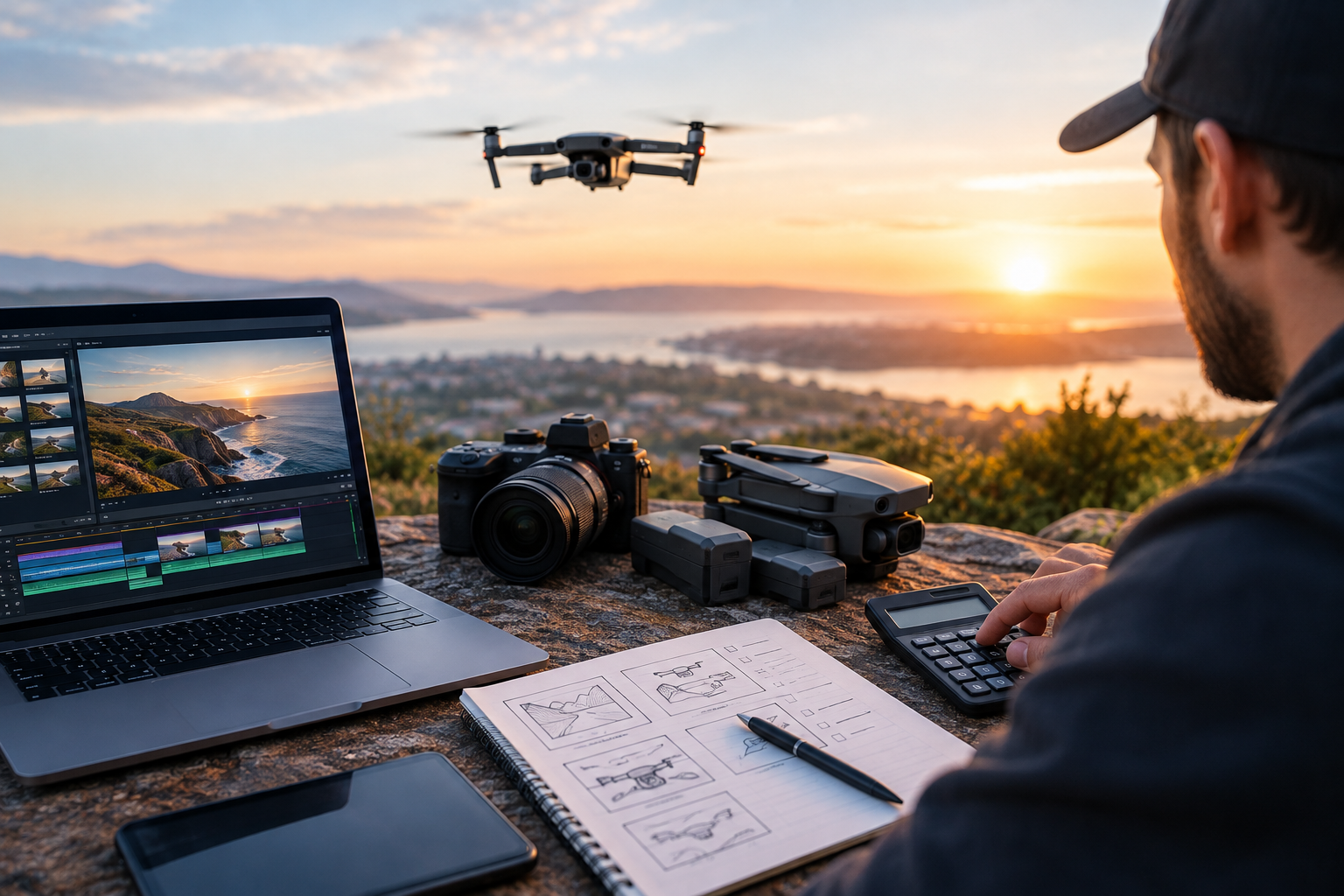
Pricing drone work is one of the hardest parts of going professional. It’s tempting to look at what another pilot in your area charges and land on a similar number, or to undercut everyone to win that first client. The trouble is that those numbers don’t account for your costs, your editing time or the risk you take on with every flight. A well-built quote protects your business, and it also gives the client a clear picture of what they’re buying.
In this article I’ll walk through how I put a quote together: which costs I account for, which pricing models exist, what I ask before quoting, and what goes in writing. I’ll also mention some dollar ranges you’ll commonly see in the U.S. market. Treat them strictly as ballpark references. They vary widely by region, client type, complexity and pilot experience, they change over time, and they aren’t anyone’s actual rate card. What matters is the method for getting to your own number.
Know Your Costs Before You Talk Price
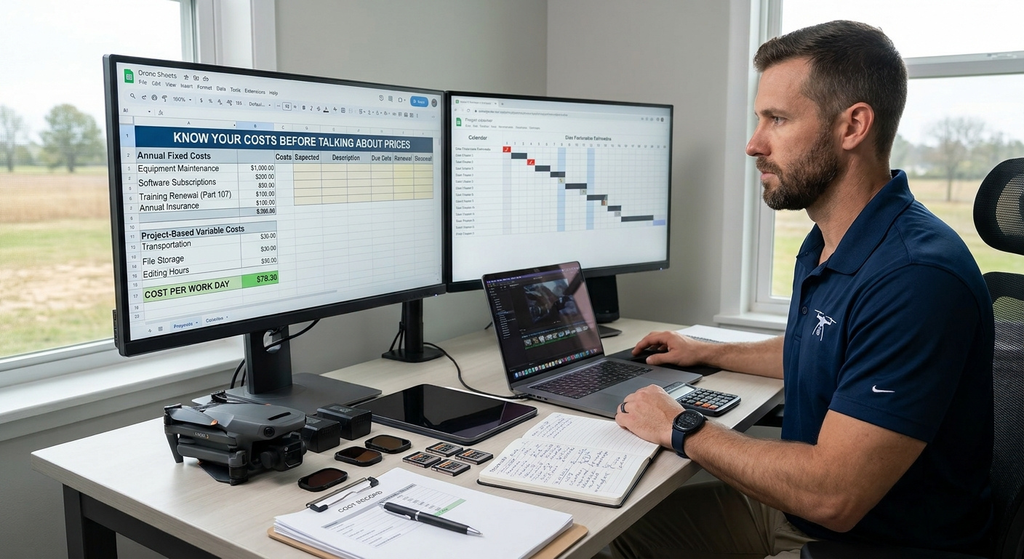
Before deciding what to charge, you need to know what it costs you to operate. A lot of pilots only think about the drone, but the aircraft is just one piece. There are fixed costs you pay whether or not you’re working, like annual insurance, software subscriptions, recurrent training and equipment maintenance. Then there are per-project costs, like travel, editing hours, file storage and sometimes an assistant or visual observer. If you don’t add them up, you end up giving away part of your work without realizing it.
- Equipment depreciation. Drones, batteries, filters, cards and your computer all have a limited lifespan; spread their cost across the jobs you expect to shoot with them.
- Insurance. Liability coverage is close to mandatory for commercial clients; annual and on-demand policies exist, with prices that vary widely by coverage.
- Software. Editing, color, mapping, cloud storage and planning apps are mostly subscriptions now.
- Compliance. Your Part 107 certificate, recurrent training, aircraft registration and the time spent on authorizations or waivers.
- Unbillable time. Answering emails, scouting, planning, backing up files and running the business.
A practical starting point is figuring out your cost per working day. Add up your annual fixed expenses, add what you want to pay yourself, and divide by the realistic number of days you expect to bill in a year, which is almost never as high as people assume at first. That number is your floor: charge less and you lose money even if the client is thrilled. From there, you layer on each project’s variable costs and the value your work brings.
Pricing Models Hourly, Package, Day Rate or Per Project
There’s no single right model, and many pilots mix several depending on the client. What matters is that the model is easy for the client to understand and that it covers your real time, including editing, which usually takes longer than the flight itself. Here are the most common models and where I tend to see each one work best.
Packages
This is the go-to model for real estate and other repeatable work. You define a fixed package, say a set number of edited photos and a short video, at a fixed price. Clients like it because they know exactly what they’ll pay, and it lets you standardize your workflow. As a rough reference, residential aerial photo packages in the U.S. often fall somewhere around $150 to $400, and combined photo and video packages around $300 to $800 or more, depending on the market, the property and the level of editing.
Hourly or Day Rate
This works well for video productions where time on location is hard to predict, or when you’re working as an operator for a production company. Hourly flight rates commonly land, very roughly, between $100 and $300, and full-day rates for commercial productions can run from roughly $800 to $2,500 or more, depending on the equipment, whether there’s a dedicated camera operator, and the production level. Be careful about billing only for flight time: prep, travel and editing are work too.
Per Project or Deliverable
Technical work like mapping, inspections and construction progress monitoring is often quoted per project, per acre or per recurring visit. Here the value is in the processed data and the report, not just the images, and pricing can be considerably higher than photography, especially with specialized sensors or strict client safety requirements. I’ve covered industrial inspections in another article; the key for pricing is to include processing time and the software you need.
Market ranges are a reference point, not your rate. Your price comes from your costs, your time and the value you deliver.
The Questions I Ask Before Quoting
A fast quote without information almost always goes wrong. Before I send a number, I ask a series of questions to understand the real scope. Clients often don’t know what they need until you ask, and their answers can change the price significantly. These questions also help me spot any regulatory issue early, before it becomes a problem on shoot day.
- Where exactly? The address lets me check the airspace, possible restrictions, and whether I’ll need LAANC authorization or a waiver.
- How will the footage be used? Social media, advertising, a technical report or broadcast all imply different editing levels and licensing.
- What deliverables do you expect? Number of photos, video length, formats, vertical versions, raw footage.
- Will there be people or vehicles on site? Flying over people is governed by 14 CFR 107.39 and may limit shots or require extra planning.
- What’s the deadline? Rush delivery means reshuffling other work and usually carries a fee.
- Is there a specific time or light? Sunrise, sunset or night operations change the logistics.
What Drives the Price of Each Project
Two jobs that look identical can have very different costs. A house in a residential neighborhood in Class G airspace is not the same as a commercial building next to an airport, where you need authorization and may be capped at a low altitude. Production complexity matters too: a video with multiple locations, planned waypoint shots, log color grading and licensed music takes far more time than a handful of edited stills. Each of those elements should show up in the quote.
Other factors are worth spelling out. Long-distance travel gets billed separately, per mile or as a flat fee by zone. So do revisions: I include a limited number of rounds and charge for extras. Usage affects value as well, since a video for a client’s own website is not the same as a national ad campaign, and in those cases charging a licensing fee can make sense. Finally, if the job requires a visual observer or a second camera operator, that cost goes in the quote, not out of your margin.
How to Build a Clear Quote
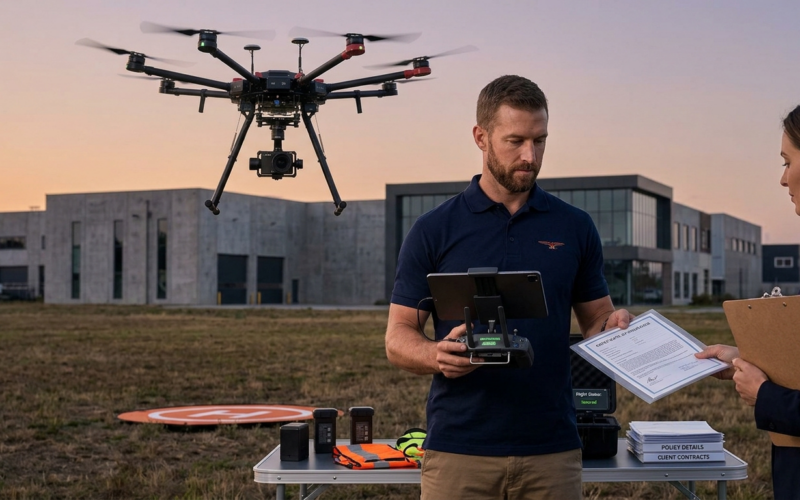
A good quote is more than a number; it’s a document that prevents misunderstandings. I describe the scope in plain language, what’s included and, just as important, what isn’t. I list the deliverables, turnaround time, number of revisions and file formats. Breaking costs into line items like flight, editing and travel helps the client see the value and makes it easier to adjust the scope if their budget is tighter.
- Deposit. Many pilots ask for a deposit, often 30 to 50 percent, to hold the date, especially on larger projects or with new clients.
- Weather policy. Put in writing that the flight is rescheduled at no charge if weather or a temporary restriction prevents it, and spell out what happens if the client cancels.
- Usage rights. State who keeps the copyright and what license the client receives.
- Expiration. Note how many days the quote is valid, since your costs change.
For recurring or higher-value work, I recommend a formal contract in addition to the quote. It doesn’t have to be a huge document, but it should cover responsibilities, insurance, cancellations, payment terms and ownership of the footage. If you don’t have experience drafting contracts, it’s worth paying an attorney to review a template you can reuse. That expense pays for itself the first time a disagreement comes up.
Common Pricing Mistakes
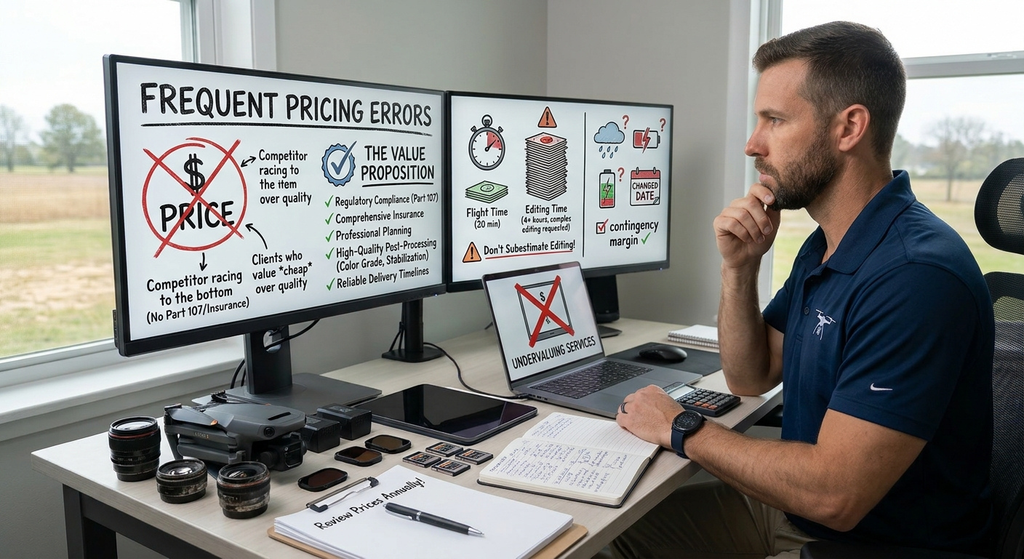
The most common mistake is competing on price alone. There will always be someone willing to charge less, sometimes without a Part 107 certificate or insurance, and joining that race only attracts clients who value cheap above everything else. It’s better to clearly explain what sets you apart: regulatory compliance, insurance, planning, editing quality and reliable delivery. A professional client understands that those things reduce their risk.
Another mistake is underestimating editing. A twenty-minute flight can turn into several hours at the computer, especially if you shoot log or the client wants multiple versions. People also forget about the unexpected: rain days, batteries that need replacing, a client who moves the date at the last minute. Building in a small cushion for those situations isn’t gouging, it’s being realistic. And finally, not revisiting your prices: what you charged two years ago may not cover what it costs you to operate today.
My Advice for Pricing with Confidence
Start with your own numbers, not someone else’s. Work out your cost per day, define two or three clear packages for your most common jobs, and save custom quotes for projects that fall outside the usual. Research your local market so you know where you stand, but use it as a reference, not a rule. The ranges in this article are there to orient you, not to be copied.
Get everything in writing, ask new clients for a deposit, and review your pricing at least once a year. Over time, your job records will tell you how long each type of project really takes and which ones are profitable, so you can adjust based on data instead of gut feeling. A clear, well-justified quote doesn’t just help you get paid fairly; it also tells the client they’re working with a professional who knows what they’re doing.
Author: Armando Colina Rojas
Comments
Comments are closed.