How To Read The Weather Before Flying Your Drone Wind, Clouds And METAR
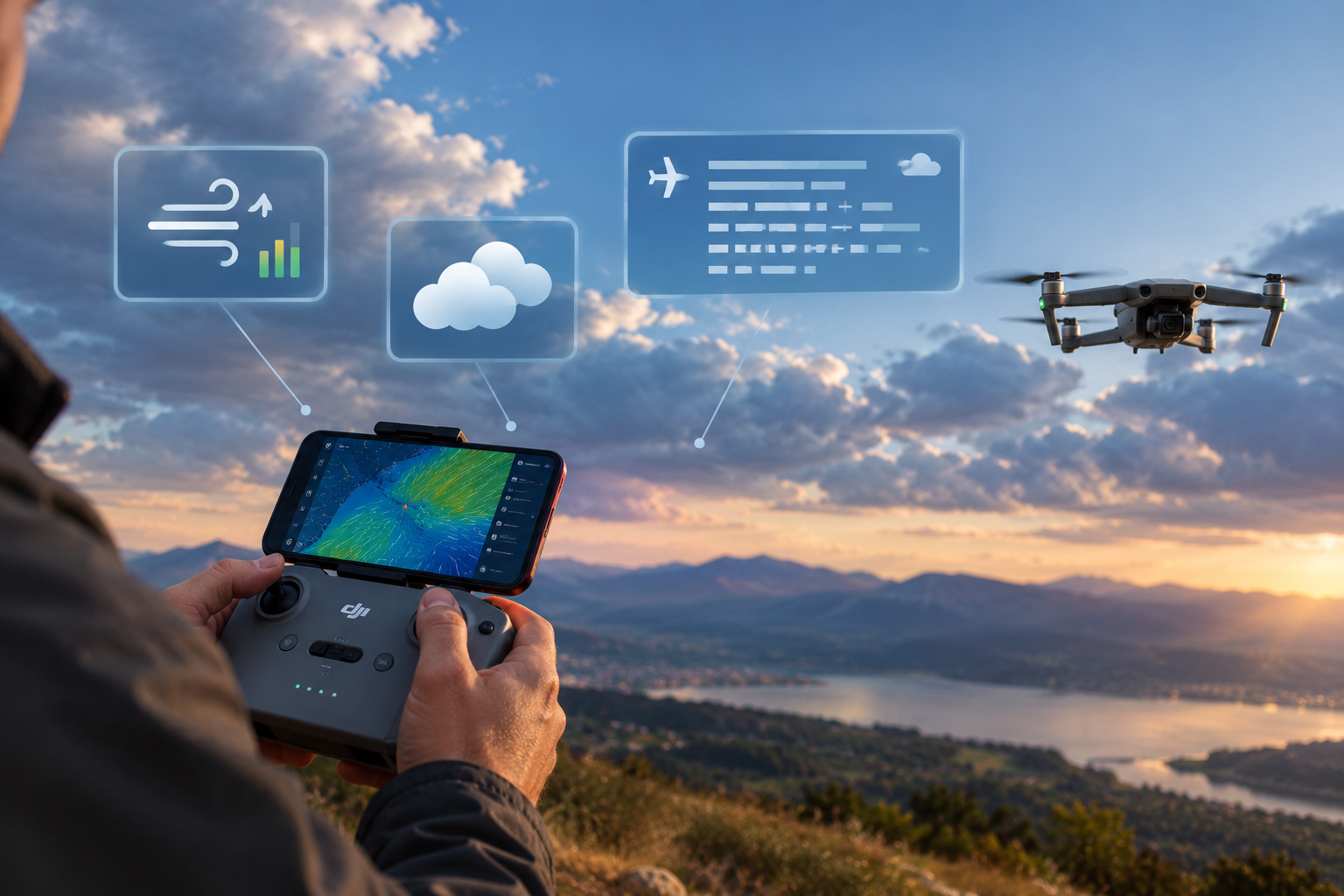
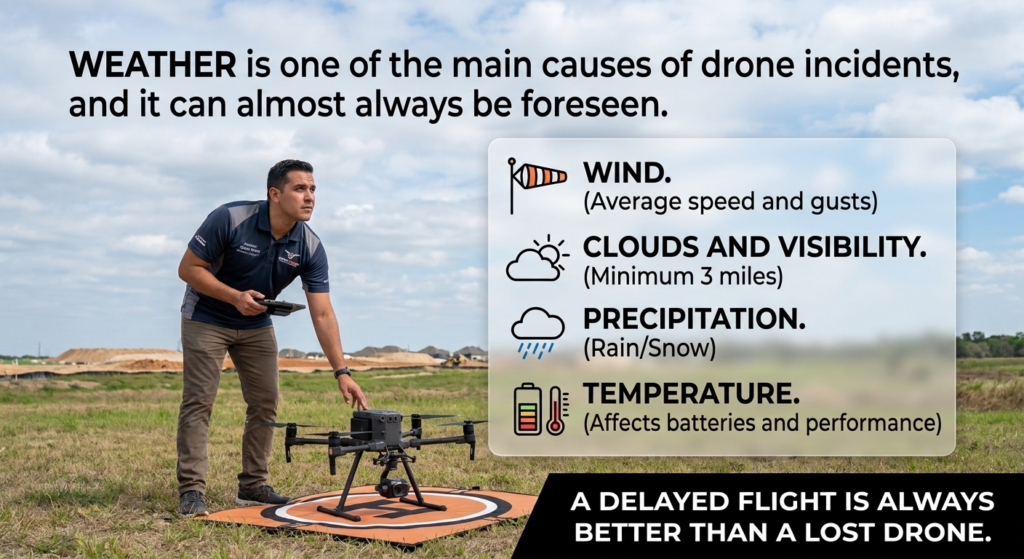
Weather is one of the main causes of drone incidents, and it’s almost always predictable. Before every flight I spend a few minutes checking it, and that check often decides whether I fly, when, and how.
What I care about in the weather
- Wind. This is the most important factor. Look at both the average speed and the gusts, and remember that wind is usually stronger at altitude than on the ground. I always compare it with the drone manufacturer’s wind resistance rating, and leave a margin.
- Clouds and visibility. Part 107 requires at least 3 statute miles of visibility from the control station, and staying at least 500 feet below clouds and 2,000 feet horizontally from them.
- Precipitation. Most consumer drones aren’t built for rain or snow.
- Temperature. It affects batteries and, together with altitude and humidity, propeller performance. In heat, at high elevation or in high humidity, the air is less dense and the drone performs worse.
How to read a METAR
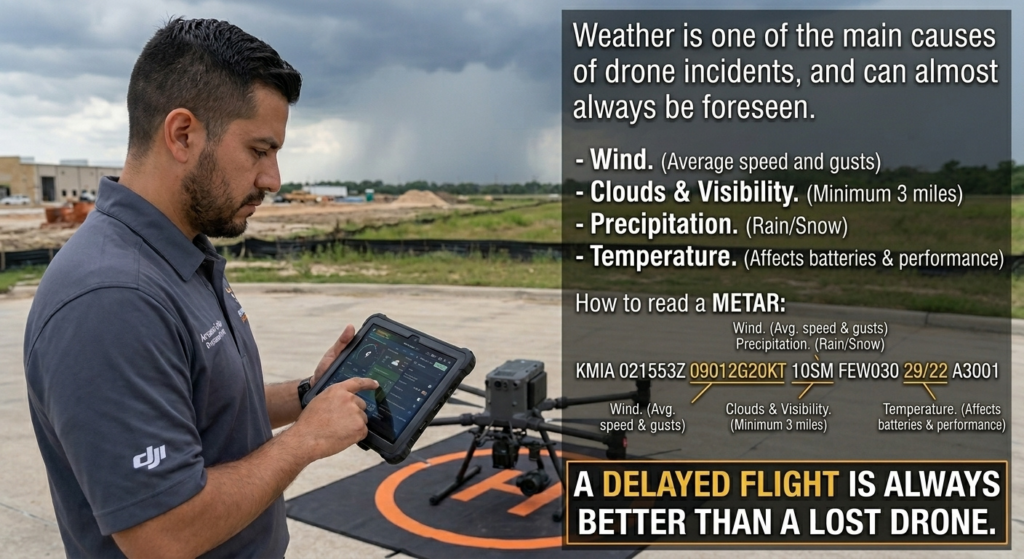
A METAR is an airport’s weather report. It’s the same one airplane pilots use, and it’s on the Part 107 test. It looks like code, but with practice it reads quickly. An example:
KMIA 021553Z 09012G20KT 10SM FEW030 29/22 A3001
- KMIA: the airport, in this case Miami.
- 021553Z: day 2 of the month, at 15:53 UTC (Zulu).
- 09012G20KT: wind from the east (090°) at 12 knots, gusting to 20.
- 10SM: 10 statute miles of visibility.
- FEW030: a few clouds at 3,000 feet.
- 29/22: temperature 29 °C, dew point 22 °C.
- A3001: altimeter setting of 30.01 inches of mercury.
A useful tip: when temperature and dew point are very close, there’s a risk of fog or low clouds.
The TAF: the forecast
The TAF uses a similar format, but instead of describing current conditions it gives the forecast for the next several hours. I check it to see whether conditions will improve or get worse during my flight window.
My final rule
Apps and reports help, but the decision is made on site. If the wind is stronger than forecast when I arrive or the sky changes, I don’t fly. A postponed flight is always better than a lost drone.
Autor: Armando Colina Rojas
Comments