DJI Gear
How to take care of your DJI drone batteries
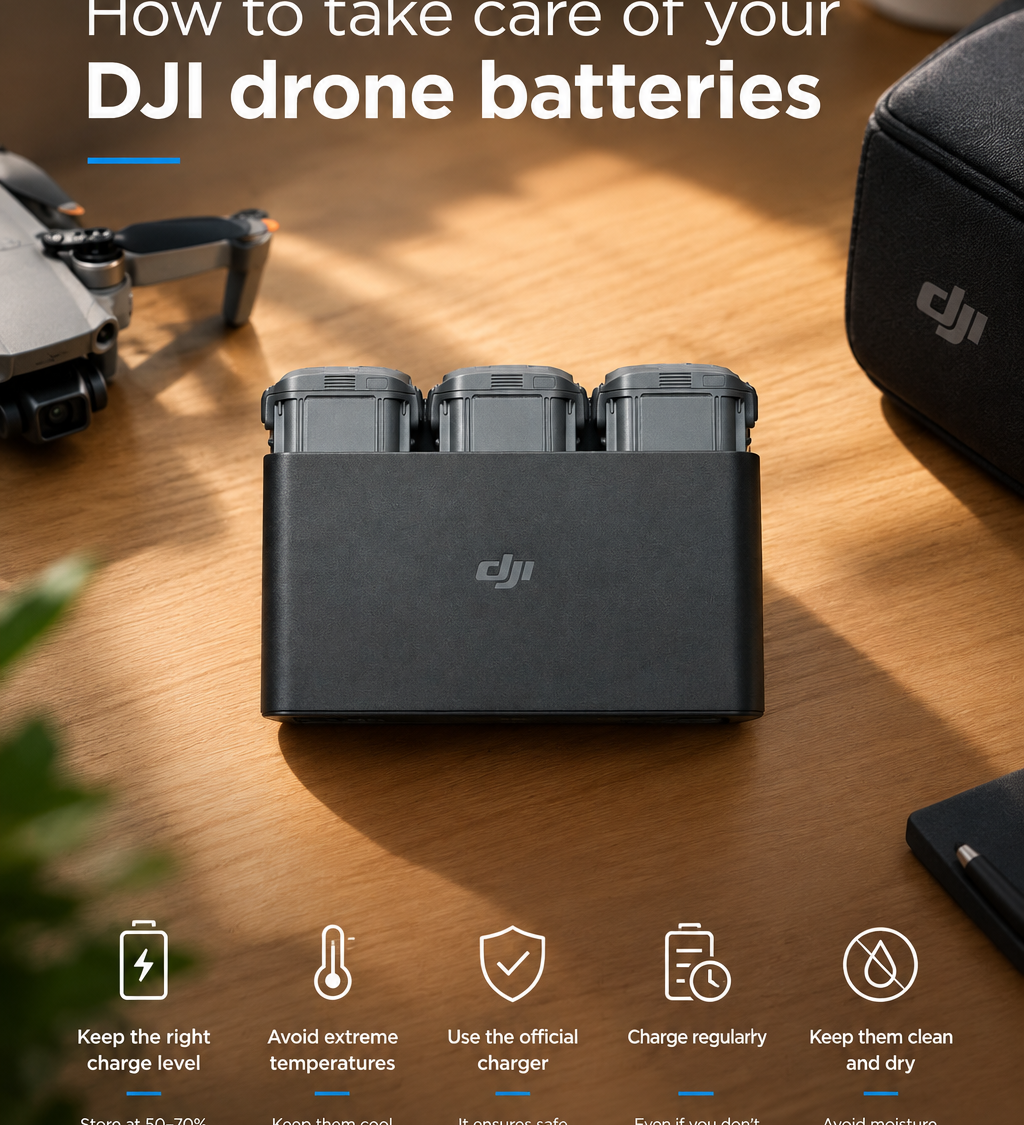
The battery is the most delicate part of a drone. It determines how long you can fly and how the drone performs in cold or heat, and if it’s neglected it can become a hazard. It’s also one of the most expensive parts to replace.
These are the habits I follow to keep batteries lasting and working safely.
When charging
- I use the official charger or a quality compatible one. A cheap charger may not respect the battery’s limits.
- I let the battery cool down after flying before charging it. DJI batteries won’t charge when they’re too hot, and it’s best not to force it.
- I charge on a non-flammable surface and never leave batteries charging unattended for hours.
When storing
- I don’t store them full or empty. For long periods, a mid-level charge is ideal. DJI intelligent batteries discharge themselves to a storage level after a few days; on some models that delay can be set in the app.
- I keep them somewhere cool and dry, away from direct sun and out of a car trunk in the heat.
- I check on them now and then if they haven’t been used for weeks. A battery that drains completely can be damaged.
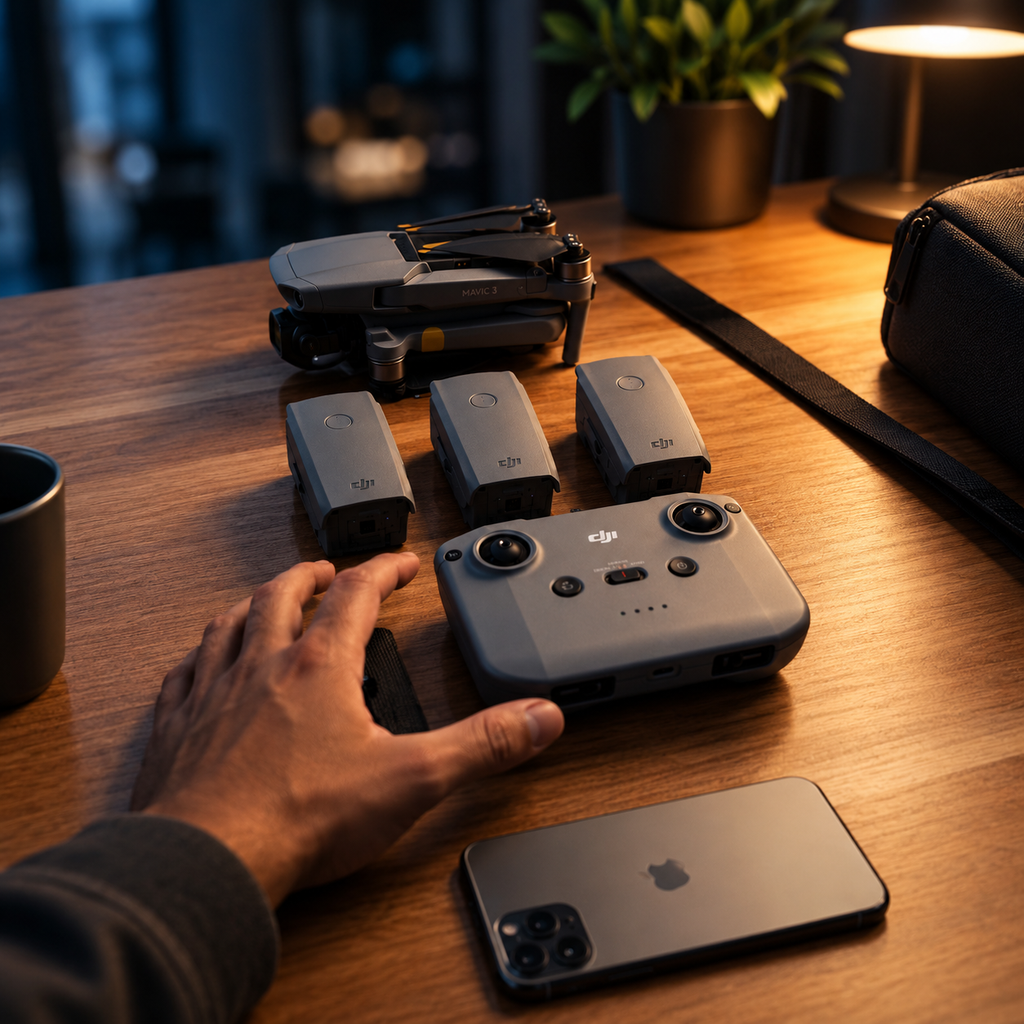
In cold and heat
- In the cold, the battery delivers less and voltage drops faster. I head out with fully charged batteries, keep them warm until takeoff, and let the drone hover for a moment before pushing it.
- In the heat, I avoid leaving batteries in the sun between flights and give them time to cool.
- I always check the manual for each model, which lists the temperature ranges for charging and flying.
Signs it’s time to retire a battery
- Swelling. If the casing bulges or doesn’t fit properly in the drone, the battery is retired. Don’t fly with it.
- Physical damage: impacts, cracks or damaged contacts.
- A noticeable loss of flight time or unbalanced cells, which the app usually shows.
To dispose of it, I take it to a battery recycling point. It never goes in the regular trash.
Air travel
Spare lithium batteries go in carry-on baggage, not checked luggage, with the contacts protected. Most DJI consumer drone batteries are under 100 Wh, but I always check the label and the airline’s rules before traveling.
The manufacturer’s instructions for each model take priority over any general advice.
Autor: ARMANDO COLINA ROJAS
Comments