Flying at Night Under Part 107 Requirements and Precautions
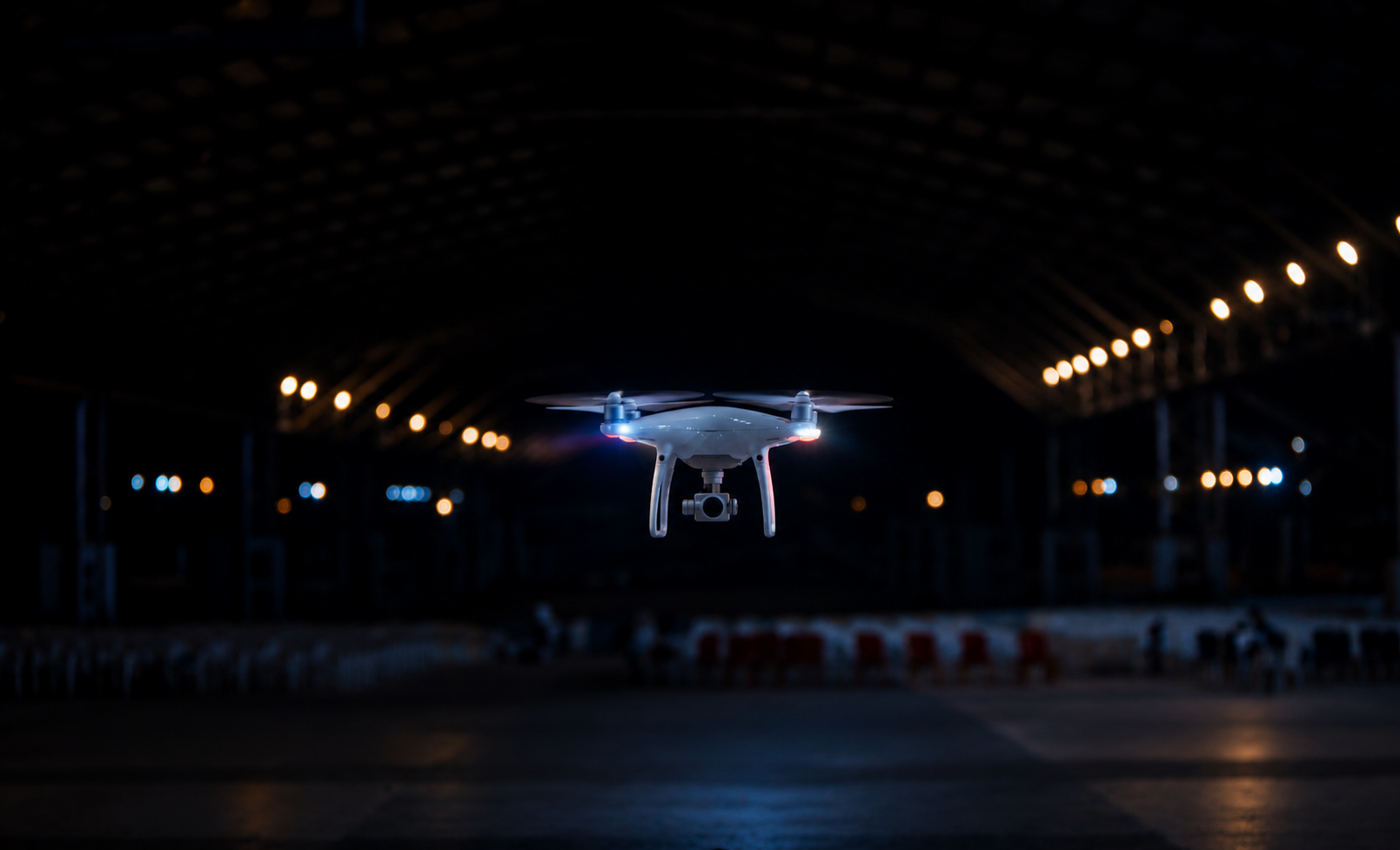
Flying at night opens up a lot of possibilities: city lights, events, inspections outside business hours. But it also changes the game. Your eyes are easier to fool, obstacles are harder to see, and the regulations add requirements.
Since April 2021, Part 107 allows night operations without a waiver, as long as two conditions are met. Here’s what they are and how I prepare.
Requirement 1 updated training
To fly at night you must have passed the updated version of the Part 107 initial knowledge test, or completed the FAA’s free online recurrent training on FAA Safety Team. This training includes specific content on night operations.
Requirement 2 anti-collision lighting
Under section 107.29, the drone must have anti-collision lights visible for 3 statute miles, with a flash rate sufficient to avoid a collision. This also applies during civil twilight, the 30 minutes before sunrise and after sunset.
The navigation lights many drones ship with usually don’t meet this requirement. The common solution is to add a strobe designed for drones.
The risks of flying at night
- Visual illusions. A steady light against a dark background can appear to move on its own. It’s easy to lose your sense of distance and orientation.
- Dark adaptation. Your eyes take about 30 minutes to fully adapt to darkness, and a bright screen undoes that in seconds.
- Invisible obstacles. Wires, branches and antennas that are obvious by day disappear at night. Many drones’ obstacle sensors also work worse in low light.
How I prepare
- I scout the site in daylight. I walk the area before dark and note obstacles, wires, and takeoff and landing spots.
- I turn screen brightness down to the lowest comfortable level to protect my night vision.
- I light the takeoff area with a soft light so I don’t trip or take off over something I can’t see.
- I fly above the obstacles I identified in daylight, with slower movements.
- I bring a visual observer when the flight calls for it. Two pairs of eyes see more than one.
Airspace at night
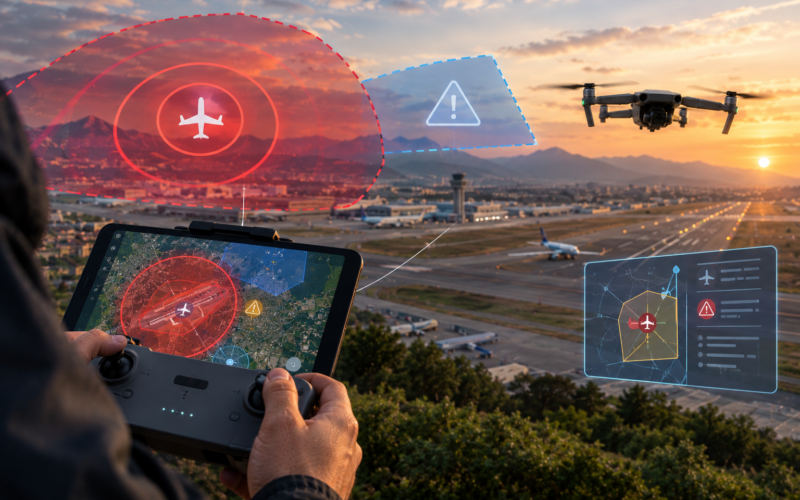
Flying at night doesn’t change the airspace rules. Controlled airspace still requires authorization, and LAANC lets you request it for night flights too.
Regulations change over time. Before you fly, always check the FAA’s official information at faa.gov.
Comments