Drones in industry: safer and more efficient inspections
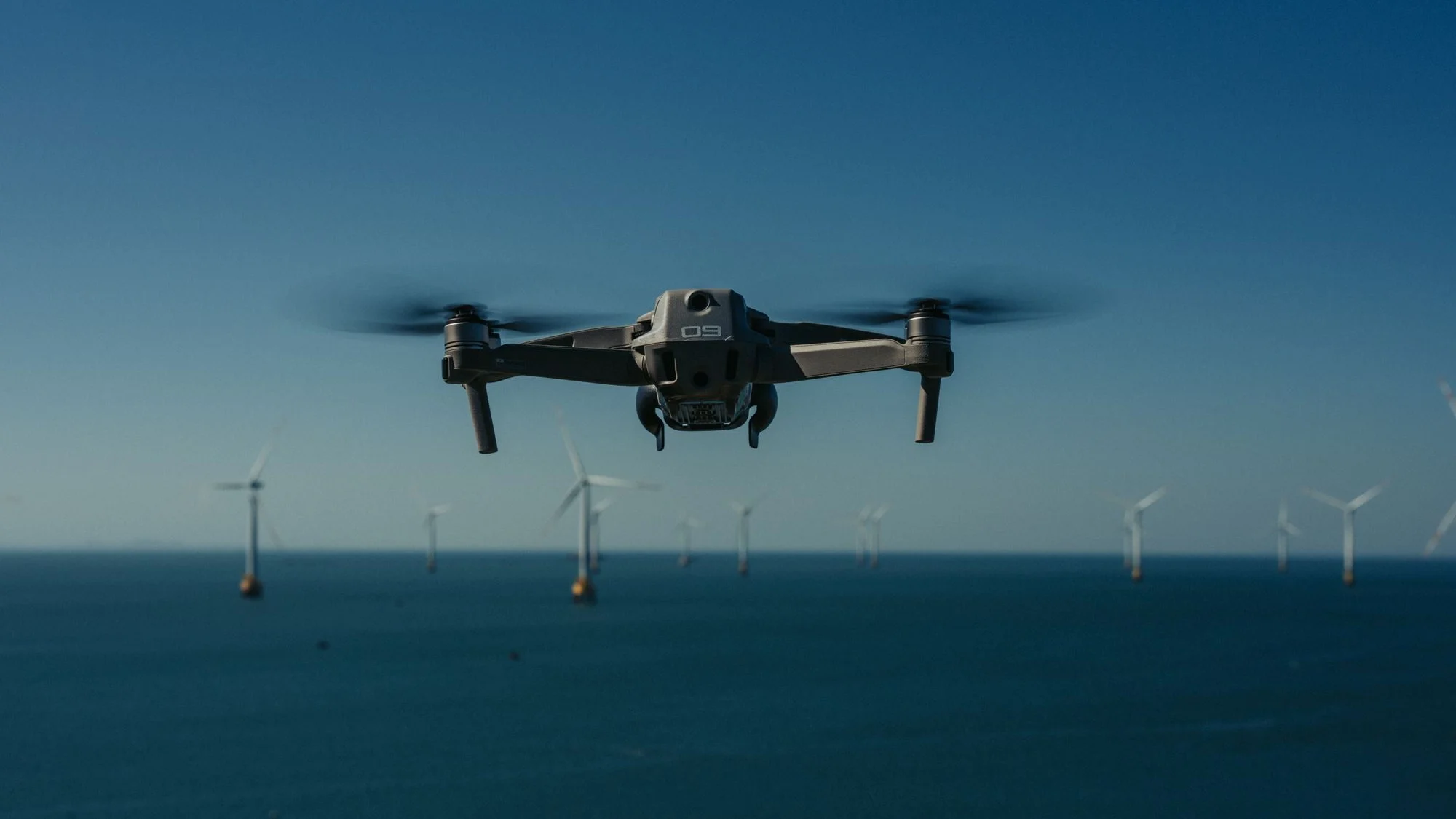
When people think about drones, they usually picture spectacular shots of beaches or cities. But one of the applications that creates the most value, and the one I am most passionate about, is far less flashy: industrial inspection. Checking a tower, a roof or a solar plant from the air can completely change the safety, time and cost of a job.
In this article I explain how a drone inspection works, what its advantages are and what you need to keep in mind so the data is actually useful.
The problem it solves
Traditionally, inspecting a tall or hard-to-reach structure means putting a person at risk: scaffolding, cranes, harnesses, ropes or even stopping the operation. All of that takes time, specialized equipment and, above all, exposure to falls and accidents.
A drone lets you see up close without climbing. The technician stays on the ground, in a safe area, while the drone captures photos and video of the point that needs checking. It does not replace the specialist, but it gives them quality information before deciding whether a physical intervention is needed.
Where it applies
These are some of the jobs where a drone makes a difference:
- Telecommunication towers. Checking antennas, mounts, cabling and signs of corrosion.
- Roofs. Detecting leaks, damaged tiles or standing water without walking on fragile surfaces.
- Solar panels. Finding dirty, damaged or faulty panels, especially with thermal cameras.
- Power lines and infrastructure. Visual inspection of poles, insulators and hard-to-reach sections.
- Industrial facilities. Tanks, stacks, steel structures and areas that would require stopping processes to inspect in person.
- Construction sites. Progress tracking and a regular visual record of the project.
How I plan an inspection
An inspection is not an improvised flight. My process always follows these steps:
- Meeting with the client. I understand what needs checking, which problem they suspect and what delivery format they need.
- Site assessment. I review the airspace, permissions, environmental risks and possible interference, such as steel structures or antennas.
- Flight plan. I define altitudes, safety distances, camera angles and the order of the points to inspect.
- Coordination on site. We agree with on-site staff on exclusion zones and communication protocols.
- Systematic capture. I cover the structure in an orderly way so no area is missed and the same route can be repeated in the future.
- Organized delivery. Images are delivered sorted and referenced so the technical team can quickly find what they need.
Why the right camera matters
The quality of an inspection depends heavily on the sensor. A camera with optical zoom lets you get visually close to a detail, like a bolt or a weld, while keeping a safe distance from the structure. In other cases, a thermal camera reveals temperature differences invisible to the naked eye, which is key for solar panels or electrical installations.
That is why, before accepting a job, I confirm that the available equipment is right for what the client needs to see. Promising a result without the proper tool is bad practice.
Safety and regulations
Inspections are usually done near structures, people at work and sometimes in restricted areas. That is why I apply FAA Part 107 with particular rigor:
- I keep the drone within visual line of sight, with an observer if the structure makes that harder.
- I respect the altitude limit, keeping in mind that next to a tall structure the rule allows flying up to 400 feet above it within a 400-foot radius.
- I request authorization when the site is in controlled airspace.
- I avoid flying over people who are not part of the operation.
What the company gains
The benefits of inspecting with a drone show up quickly:
- Less risk for staff, because nobody climbs where it is not necessary.
- Less inspection time and, in many cases, no need to stop operations.
- Comparable data over time, by repeating the same routes.
- Better decisions, because the technical team sees the problem before moving resources.
My approach
For me, a good inspection is not measured by how spectacular the images look, but by how useful they are for whoever has to make decisions. Every photo should answer a specific question: is there damage, where is it, and how has it changed?
If your company needs to check a structure, a roof or a facility, I can help you plan the inspection and deliver the information in the format your team needs. Write to me through the contact page and let's figure it out together.
Comments